
DACHSER is transferring its range of logistics services to the digital world. As a company-wide digitalization project, the DACHSER platform is a central building block for fundamentally redesigning the customer experience. At the transport logistic trade fair, customers and interested parties were given their first glimpse of the platform, which will be available to all DACHSER customers from 2024.
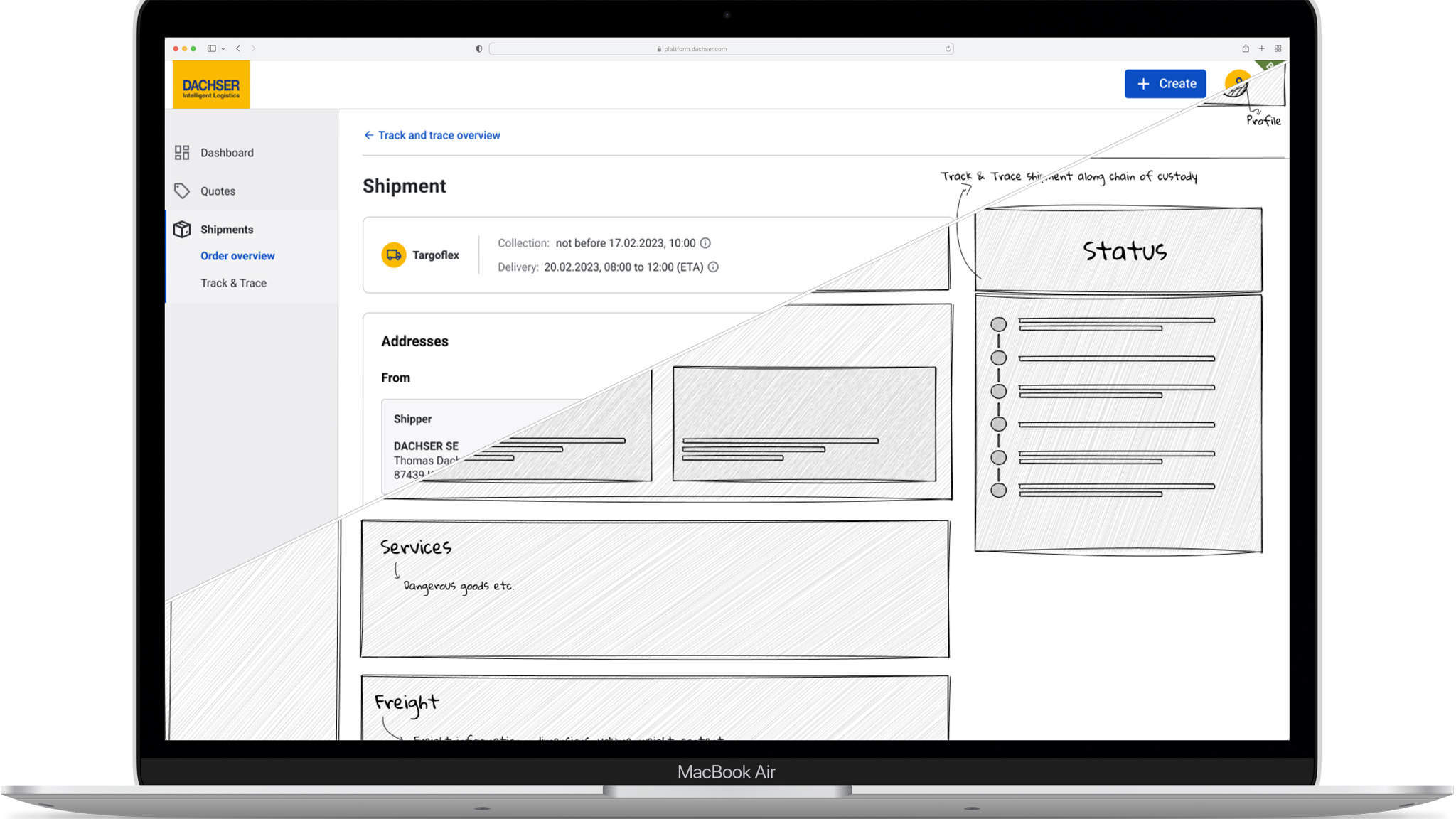
From concept to platform: the interface of the new DACHSER platform
For many years, DACHSER has been developing software and systems in-house that are tailored entirely to the needs of its customers. The DACHSER platform is a logical continuation of this philosophy. The platform is currently being developed in an agile project setup, i.e. in direct exchange with selected pilot customers.
Transparent one-stop solution
The DACHSER platform brings together the services of the Road Logistics and Air & Sea Logistics business fields in a user-friendly, modern interface. Supplemented by innovations such as end-to-end tracking across all freight routes, this creates a customized, digital one-stop solution for customers. DACHSER is thus taking a major step toward completely transparent flows of goods and data, especially with regards to intercontinental transports using different modes of transport.
The DACHSER platform is developed iteratively and in direct exchange with customers.
Product development is taking place within iterative testing and development phases. Since the start of the project, intensive research phases have been used to query customer needs and obtain feedback on product designs. Since April 2023, pilot customers have already been working with a first version of the platform. All research results are always incorporated into the subsequent development phase. This way of thinking and working is an expression of an agile, digital mindset that DACHSER is promoting throughout the company as part of its digitization strategy.
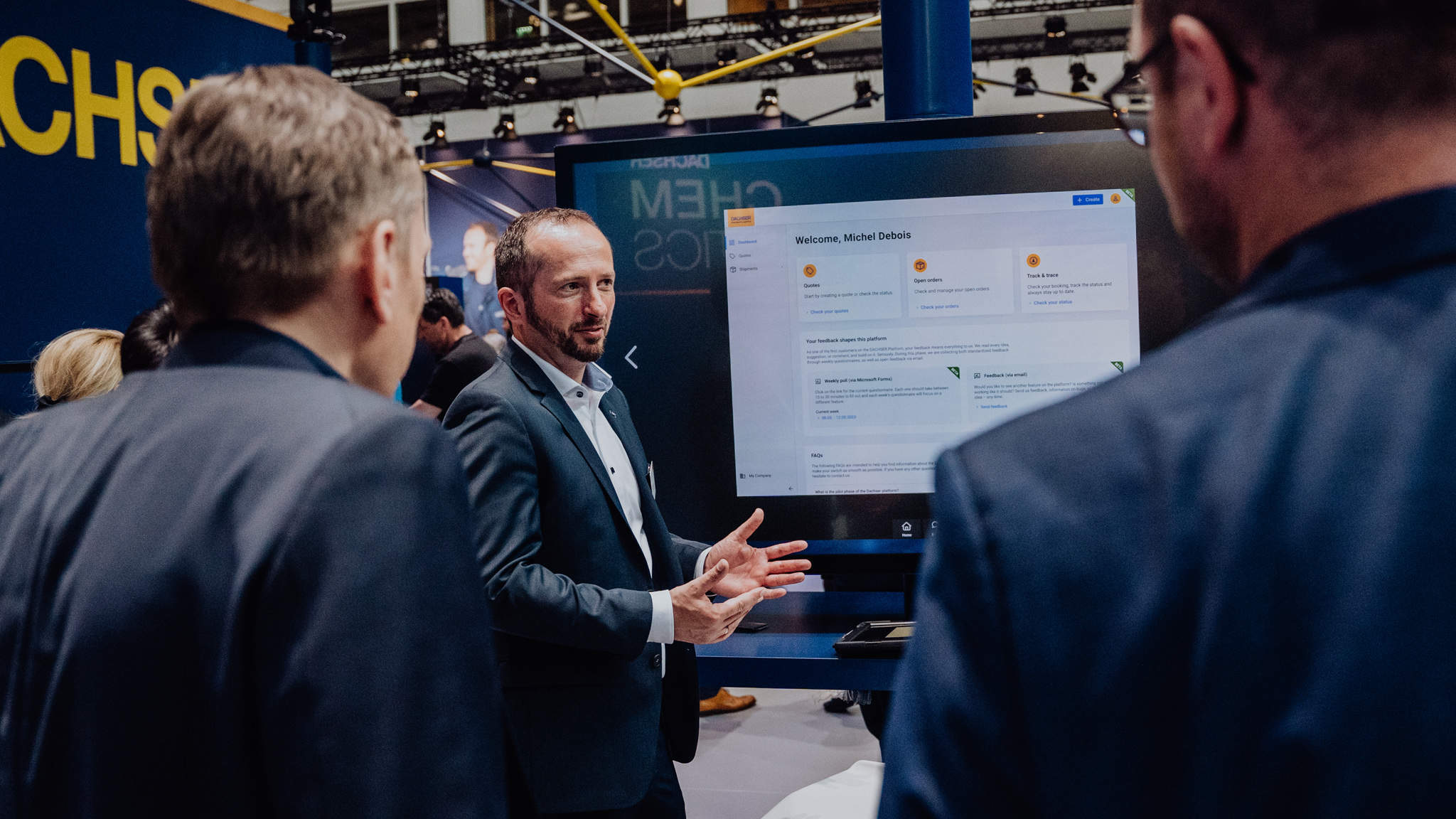
Ralf Messing, Team Leader eLogistics Consulting at DACHSER, demonstrates the dashboard at the transport logistic trade fair in Munich.
Highlight at transport logistic 2023
Insights into the new platform were offered for the first time at the leading transport logistic trade fair in Munich. DACHSER customers, interested parties, and the media were able to learn about the project's vision, development, and timeline roadmap on interactive screens.
“I was posted offshore where everything used to reach us via ships, including food and water”
Siddhant Palkhedkar was born and brought up at Nashik, a city close to Mumbai. After successfully completing his Degree in Mechanical Engineering in 2013, he shifted to Mumbai to work with the largest oil and natural gas company in India.
While working he had an instigation to get knowhow of logistics industry. He joined DACHSER as an Asia Pacific Management Trainee in June 2019, we discussed with him to know more. Let’s see what we found out.
Renowned as they are for innovation and quality paired with tradition and craftsmanship, many products from Switzerland enjoy an excellent reputation worldwide. Among them Ricola cough drops, a classic sweet whose special recipe contains 13 herbs from the Swiss mountains.
“Nothing is more constant than change”—wise words that seem to be everywhere at the moment. As the world turns faster and faster, the pace of innovation and the pressure to change are increasing in logistics as well. In the latest issue of the DACHSER magazine, we report on what our company and our customers are doing to address pressing problems of the future.
We face the possible event that the United Kingdom will leave the European Union by the end of October 2019.
This will affect shipments from and to the UK and delays are to be expected. Reasons are amongst others that a higher percentage of shipments has to be processed by customs authorities and that European shippers might switch to Air Freight to avoid border controls.
We expect delays particularly for shipments that do not move into the UK directly or out of the UK directly but via continental Europe. For example if Sea Freight shipments are unloaded in Rotterdam and then forwarded to the UK via truck and ferry:
Fiscal representation in continental Europe will no longer be possible for goods to the UK. Instead, a transit procedure must be opened.
The expected problems in Calais/Dover will cause delays in the delivery of goods to the UK.
Incoterms for subsequent deliveries from the EU to the UK may also have to be converted if necessary, as costs for customs clearance have to be included
Therefore we strongly suggest to ship directly to the UK whenever possible, at least for some time following the Brexit until things clear up. In addition to that, you can also find a “Brexit checklist” here.